Wavellite And Variscite Crystal Cluster
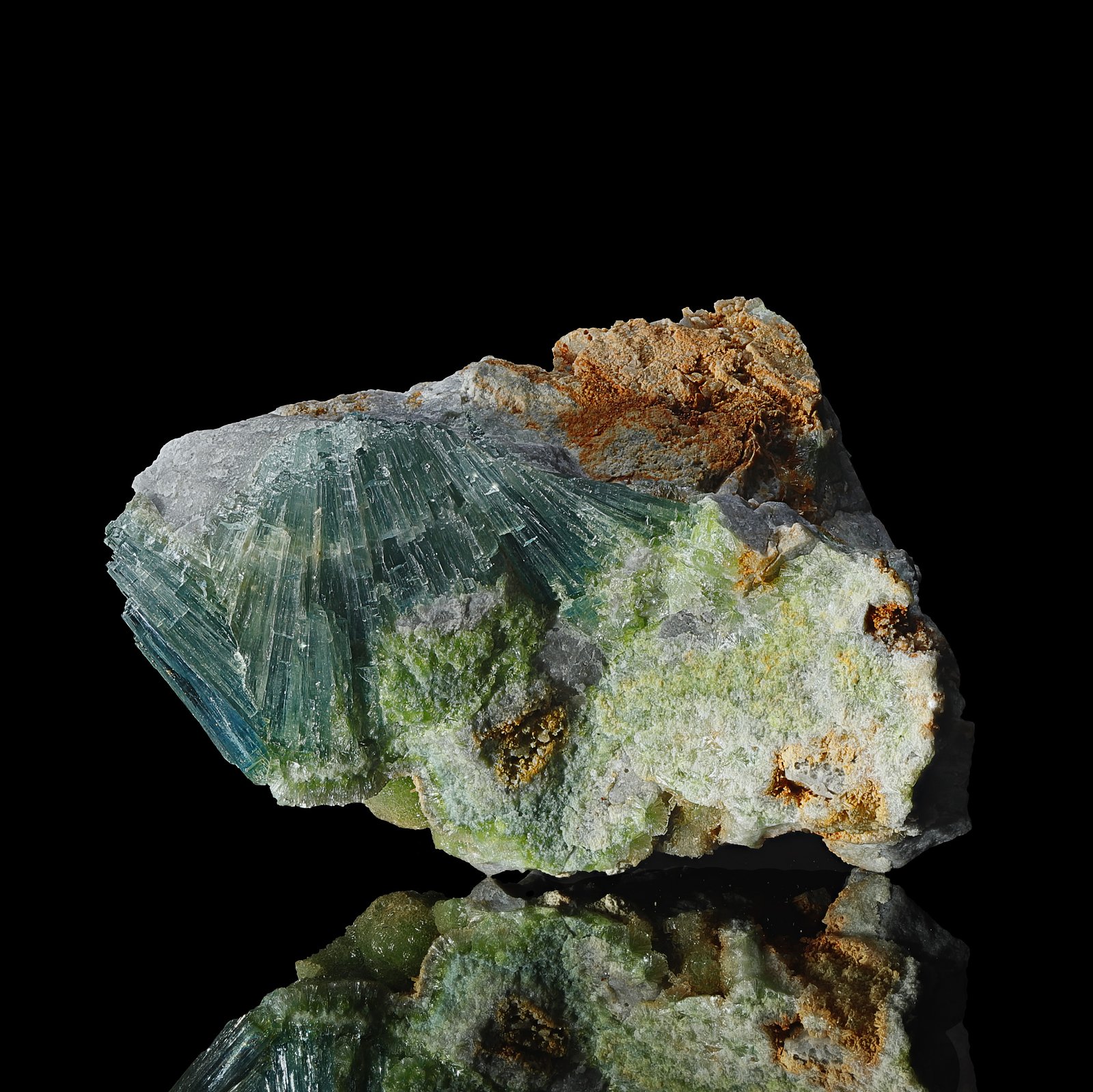
Wavellite is a classic radiating mineral, forming spectacular pinwheel aggregates emanating from a central core in spherulitic balls. When the balls are complete, the radial structure is internal and not usually visible. A crystal aggregate needs to be fractured to see and appreciate the outstanding radial habit of Wavellite. Wavellite was named in 1805 after William Wavell, an English physician who first discovered this mineral.
Variscite is a secondary mineral formed by direct deposition from phosphate-bearing water which has reacted with aluminium-rich rocks in a near-surface environment. It occurs as fine-grained masses in nodules, cavity fillings, and crusts.
Variscite is a secondary mineral formed by direct deposition from phosphate-bearing water which has reacted with aluminium-rich rocks in a near-surface environment. It occurs as fine-grained masses in nodules, cavity fillings, and crusts.
Technical details: Canon EOS 6D Mark II Camera, Canon 100mm Macro f/2.8 Lens, 1/160 sec. - f/8 - ISO 100 -- Size - 37.5mm x 18.0mm x 18.3mm - Weight - 15.1 grams. (68 images stacked).